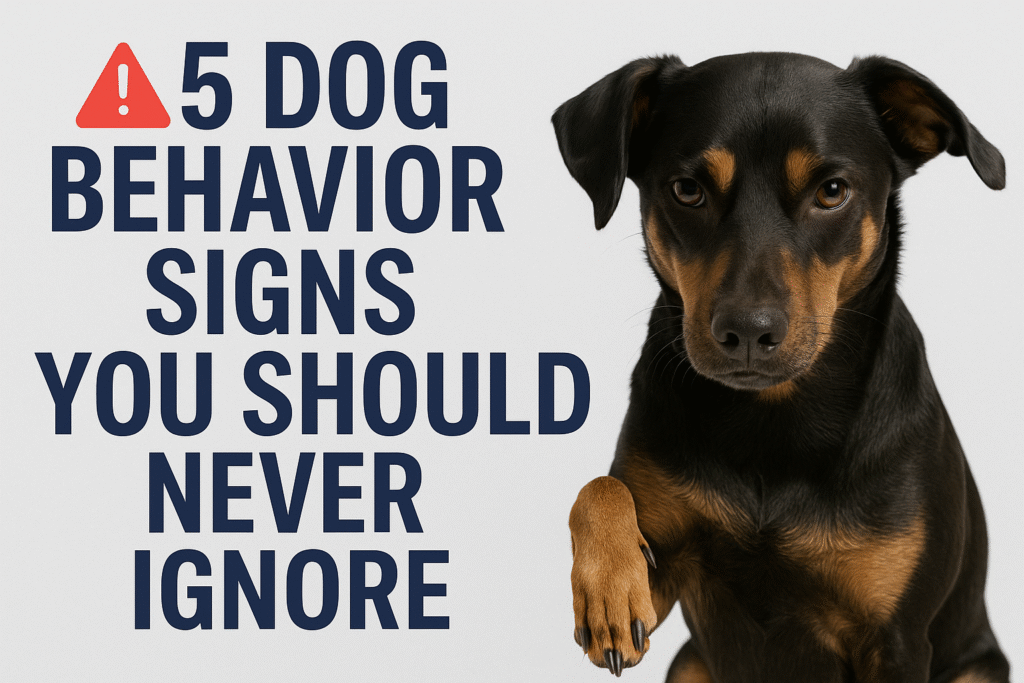
Dogs communicate constantly — just not in the way humans do.
While some behaviors simply reflect personality or breed traits, other actions may signal deeper emotional or physical issues that require attention. As pet owners, it’s our responsibility to understand what our dogs are trying to tell us before minor problems become major ones.
Below are five dog behavior signs you should NEVER ignore, why they matter, and what they may be trying to communicate.
1️⃣ Sudden Aggression — Growling, Snapping, or Protectiveness
Many owners dismiss early aggression as “bad mood,” but dogs are rarely aggressive without a reason. If your friendly, gentle dog suddenly begins:
- Growling when approached
- Snapping when being touched
- Guarding toys, food, or people
- Showing teeth without provocation
These are warning signs, not random outbursts.
Possible Reasons
| Cause | Explanation |
|---|---|
| Pain | Arthritis, joint issues, tooth pain |
| Fear | Previous trauma or new environment |
| Resource guarding | Food or toy insecurity |
| Anxiety | Change in family, sounds, guests |
A dog that snaps is not being stubborn — it is communicating discomfort, worry, or confusion. Ignoring these signs can escalate to more serious incidents.
What You Should Do
- Schedule a vet check to rule out pain or illness.
- Avoid punishment — it increases fear-based aggression.
- Work with a certified dog behaviorist if guarding or fear persists.
By responding early, you protect your dog and everyone around them.
2️⃣ Excessive Licking, Scratching, or Paw Chewing
Occasional licking or scratching is normal. However, if your dog is doing it constantly — especially at night — something is wrong.
What It Could Mean
- Allergies (food, grass, pollen)
- Fleas or mites
- Skin infections
- Stress or boredom — self-soothing behavior
- Pain — licking one isolated spot
Dogs don’t show pain the way humans do; instead, repetitive licking often becomes their coping mechanism.
When to Take It Seriously
- Red skin or rashes
- Hair loss patches
- Constant wet spots (lick dermatitis)
- Strong smell from infected skin
- Licking that interrupts sleep
Early treatment prevents small irritation from becoming long-term skin damage.
3️⃣ Loss of Interest in Play, Walks, or Family Interaction
A playful dog that suddenly withdraws is sending a strong message.
Behavioral Red Flags
- Not greeting you at the door
- Ignoring toys or treats
- Hesitating to climb stairs, jump, or run
- Choosing to sleep alone in another room
- Appearing sad, tired, or “lost”
Potential Causes
| Category | Examples |
|---|---|
| Medical | Thyroid issues, pain, fever, digestive discomfort |
| Emotional | Anxiety, grief, fear |
| Aging | Cognitive changes |
| Depression-like symptoms | After family changes |
Dogs experience emotional shifts similar to humans. A new baby, a moved piece of furniture, or another pet’s loss can affect their mood deeply.
What Helps
- Keep routines predictable
- Offer low-impact games like sniffing or puzzle feeders
- Contact your vet if behavior changes last more than a week
Sometimes the problem is physical; other times, emotional — either way, early action prevents decline.
4️⃣ Constant Barking, Whining, or Vocalizing
Dogs bark for a reason, and changes in loudness, frequency, or tone can be important.
When Barking Isn’t “Just Barking”
- Barking at night when they never used to
- Whining when touched or lifted
- Sudden howling or crying
- Barking while looking directly at you
What They May Be Expressing
- Separation anxiety
- Fear of new surroundings
- Confusion (common in senior dogs)
- Pain that increases when they move
- Environmental stress — sirens, neighbors, fireworks
Don’t mistake vocalizing for misbehavior — it is communication.
How to Respond
- Identify triggers (timing, sounds, people)
- Provide exercise and mental stimulation
- For seniors — ask your vet about cognitive support supplements
- Avoid yelling or punishing — it increases anxiety
Dogs need assurance, not fear, when vocalizing for help.
5️⃣ Sudden Changes in Eating or Bathroom Habits
Dogs rarely change routines without reason. Pay close attention if your dog begins:
- Refusing meals
- Drinking excessively
- Becoming constipated or having diarrhea
- Barking to go out frequently
- Peeing inside despite being trained
What These Behaviors May Indicate
| Type | Examples |
|---|---|
| Digestive issues | Food intolerance or infection |
| UTI | Common in females and older dogs |
| Diabetes or kidney concerns | Excessive water intake |
| Stress | Visitors, moving, weather |
| Dental pain | Causing picky eating |
A dog who suddenly urinates indoors is not “being naughty.” It may simply be the only way it can express distress.
What You Can Do
- Monitor pattern changes
- Switch gradually to simpler diets
- Keep fresh water available
- Reach out to your vet if changes last more than 48 hours
Final Thoughts — Your Dog Is Always Communicating
Dogs can’t use words, but their behavior is their voice. Aggression, withdrawal, licking, barking, and disrupted routines are messages — not misbehavior.
The sooner we pay attention, the sooner we can help them feel secure, healthy, and understood.
A dog that feels heard becomes a dog that feels safe — and a safer dog is a happier dog.